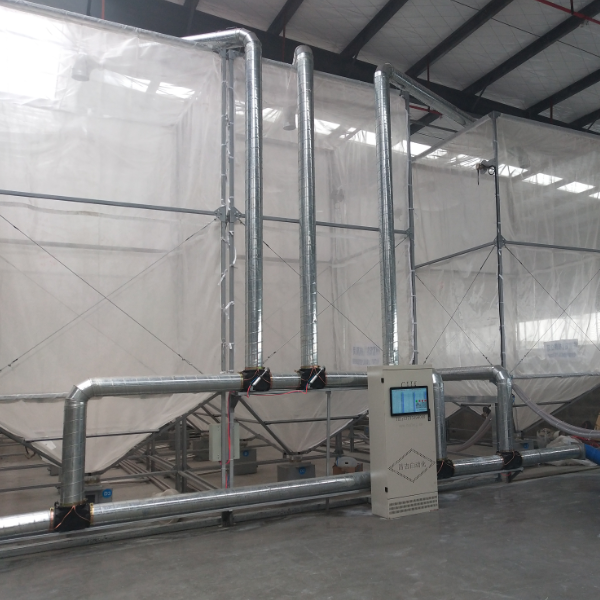
EPS taker panel lamination machine
The EPS tacker panel lamination machine represents a significant advancement in the insulation panel manufacturing industry. By automating the lamination process, it increases efficiency, enhances product quality, and offers the flexibility to work with various materials. Although the initial investment and space requirements might be considerable, the long-term benefits — including cost savings, output quality, and production speed — make it a worthy addition to any production facility focused on thermal insulation products. For businesses aiming to scale operations or improve product quality in the insulation sector, investing in a reliable EPS tacker lamination machine could propel them ahead in the competitive market.
Suit for EPS machine
Description
Key Functions
| Function | Description |
|---|---|
| Material Feeding | Automatic feeding of EPS foam and facing materials into the machine. |
| Gluing System | Applies adhesive evenly across surfaces of the materials. |
| Laminating | Presses materials together under controlled heat and pressure. |
| Cutting and Trimming | Precise cutting and trimming of laminated panels to desired dimensions. |
| Cooling and Curing | Facilitates the setting of adhesive through controlled cooling systems. |
Technical Specifications
| Specification | Detail |
|---|---|
| Machine Type | Automatic/semi-automatic |
| Lamination Speed | Up to 10 m/min |
| Maximum Panel Width | 1200 mm |
| Maximum Panel Thickness | 200 mm |
| Power Supply | 380V, 50Hz |
| Control System | PLC-based |
What is an EPS Tacker Panel Lamination Machine?
An EPS Tacker Panel Lamination Machine is a type of industrial equipment used to adhere a protective or decorative facing material, such as aluminum foil, plastic film, or paper, to EPS foam panels. These machines are crucial in the production of insulated sandwich panels, which are commonly used in the construction of energy-efficient buildings.
Benefits
The integration of an EPS tacker panel lamination machine in your production line offers numerous advantages:
- Increased Production Speed: Automates the lamination process, significantly reducing the time compared to manual lamination.
- Consistent Quality: Ensures uniform application of adhesives, resulting in high-quality, defect-free panels.
- Versatility: Capable of handling a variety of materials, thus broadening the range of products that can be manufactured.
- Energy Efficiency: Typically designed to optimize energy consumption, leading to reduced operational costs.
- Safety: Features built-in safety mechanisms to protect operators.
Limitations
While EPS tacker panel lamination machines bring substantial benefits, they also have some limitations:
- High Initial Investment: The upfront cost can be significant, potentially deterring small-scale manufacturers.
- Technical Skill Requirement: Operative and maintenance staff require specific training to handle these machines effectively.
- Space Requirements: These machines occupy considerable floor space, which may be a constraint in smaller facilities.
Maintenance or Installation Tips
- Regular Inspection: Routinely check mechanical and electrical components to prevent unexpected breakdowns.
- Cleanliness: Keep the machine clean, particularly the adhesive applicators and rollers, to ensure optimal operation.
- Proper Installation: Ensure that the machine is correctly installed; level surfaces are critical for smooth functionality.
- Training: Provide comprehensive training for operators to handle the machine safely and efficiently.
Typical Applications
EPS tacker panel lamination machines are widely used in various sectors, primarily including:
- Building and Construction: For manufacturing insulated roofing and wall panels.
- Packaging: Production of robust, insulated packaging solutions for temperature-sensitive goods.
- Automotive: Creation of insulated linings for automotive interiors.
Output and Its Reuse
The output from these machines typically includes finished, laminated EPS panels that can be directly used in construction or packaging. The scrap or off-cut EPS materials can often be recycled, providing an environmentally friendly aspect to using these machines.
Product


video
Leave a Message