


EPS Mold to Easily Break Foam Combinations by Hand
An EPS mold designed for hand-breakable combinations is a small innovation with big efficiency benefits. Whether you’re in packaging, agriculture, or manufacturing, it allows you to produce multi-unit EPS foam products that are easy to separate and use.
From simplified logistics to enhanced customer experience — it’s a smart investment for scalable foam operations.
Suit for EPS machine
Product Description
What is an EPS Mold Designed for Hand-Breakable Foam Combinations?
When we think of EPS (Expanded Polystyrene) molds, we often imagine solid foam blocks used for packaging, insulation, or construction. But there’s a special category of EPS molding that creates “easy-break” foam combinations — foam components that can be cleanly and easily separated by hand without tools.
This kind of mold is specially designed to produce connected foam units (like trays, boxes, or sheets) with weak joint lines, making it convenient for end-users to break apart and use them individually.
Think of it as the foam version of a perforated sheet of paper!
🔧 Why Use Hand-Breakable EPS Combinations?
There are several smart reasons to use this kind of foam design:
- 🔹 User Convenience: No tools required. Just snap and go.
- 🔹 Bulk Shipping Efficiency: Ship multiple units as one large block, reduce handling cost.
- 🔹 Assembly Simplicity: Great for multi-part packaging or modular systems.
- 🔹 Reduced Breakage: Less likely to damage individual parts during transit.
This design is perfect for industries that need quick deployment, like agriculture trays, industrial packaging, or custom foam kits.
🛠️ How Does the Mold Work?
A traditional EPS mold is designed to form one solid block. But in this special mold:
- The cavity includes thin joint lines (called break lines).
- These lines are either partially molded or weakened by adjustable mold pins or edges.
- As the EPS expands and fills the cavity, it fuses together—but not fully at the break line.
- Once ejected, the user can easily separate the units by hand.
In short: one mold → multiple separable foam units.
📏 Common Applications
| Industry | Application |
|---|---|
| Agriculture | Nursery trays, seeding boxes with snap-off sections |
| Electronics | Protective packaging with removable inserts |
| Medical | Breakable EPS trays for vaccine or test kits |
| Food | Multi-slot containers, easily divided |
| E-commerce | Modular shipping foam that customers can pull apart easily |
This kind of foam packaging adds a layer of flexibility that rigid packaging lacks.
⚙️ Mold Design Considerations
Creating such molds requires precise engineering. Key design elements include:
- Controlled joint thickness: Typically between 1mm–3mm depending on foam density.
- Air vent layout: To ensure complete filling without fusing weak joints.
- Mold pin control: Movable pins or inserts to weaken areas during molding.
- Steam balance: EPS pre-expansion and steam cycle must be tuned to avoid over-fusion.
🎯 Tip: Work with an experienced mold manufacturer that understands steam pathing and cooling zones.
🔩 Material & Density Factors
For easy break functionality to work correctly:
- Low to medium EPS density (12–20 kg/m³) is ideal.
- Higher densities (25+ kg/m³) may require more precise joint engineering or may resist breakage.
- Using virgin EPS beads instead of recycled foam gives cleaner break lines.
Always balance between mechanical strength and ease of breakability based on your end use.
✅ Benefits for Manufacturers
Here’s why this mold type is loved in production lines:
- Reduces SKUs: One mold can output multiple usable units.
- Speeds up packing: Less manual labor needed to separate foam pieces.
- Cuts tooling costs: A single mold can create a modular system.
- Improves sustainability: Minimizes waste and over-packaging.
If you’re looking for efficient, scalable foam production — this design checks the boxes.
🔎 Case Example: EPS Seeding Tray Mold
An agricultural client needed 24-cell EPS seeding trays that could be broken into sets of 6.
💡 Solution:
- A single EPS mold produced a full tray with 24 cells.
- Mold was engineered with three break lines.
- The farmer could break off each 6-cell section by hand, use them as needed, and reduce space waste.
Result? Higher satisfaction, easier use, lower transport volume.
❓FAQs
Q1: Can I convert an existing EPS mold into a hand-breakable design?
Possibly, but it depends on the mold frame and cavity design. You may need modification from the original mold maker.
Q2: How clean is the break line?
Very clean — if designed properly. The foam separates without messy beads or tearing.
Q3: Does this affect the strength of the foam?
Only at the break lines. The rest of the foam remains solid and durable.
Q4: What machines can run this mold?
Any EPS shape molding machine with adjustable steam and vent control.
Q5: Can this apply to EPP or ETPU?
It’s possible, but EPS is more suitable due to its bead behavior and fusion properties.
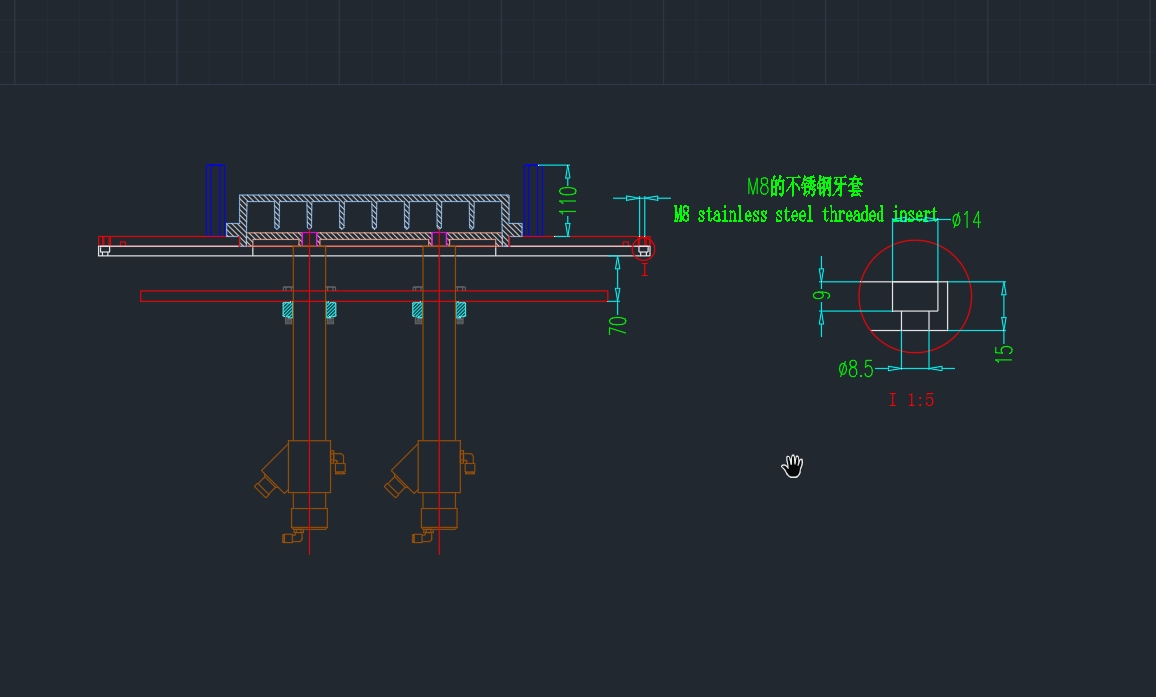
2D Structral Drawing


3D Photo


video
Leave a Message


