EPS Board Wrapping and Stacking System for Existing Cutting Lines
EPSTEC offers a custom EPS board wrapping and stacking system for manufacturers who already operate an EPS cutting line and want to improve downstream packing. The system brings conveying, stacking and film wrapping into a coordinated handling process. Share your board sizes, required pack arrangement and existing line layout so the proposed configuration can be reviewed for your factory.
Description
Downstream Packing for an Existing EPS Cutting Line
After cutting, EPS boards still need to be grouped, transferred, stacked and prepared for dispatch. This system focuses on those downstream operations for factories planning an upgrade to their existing cutting line.
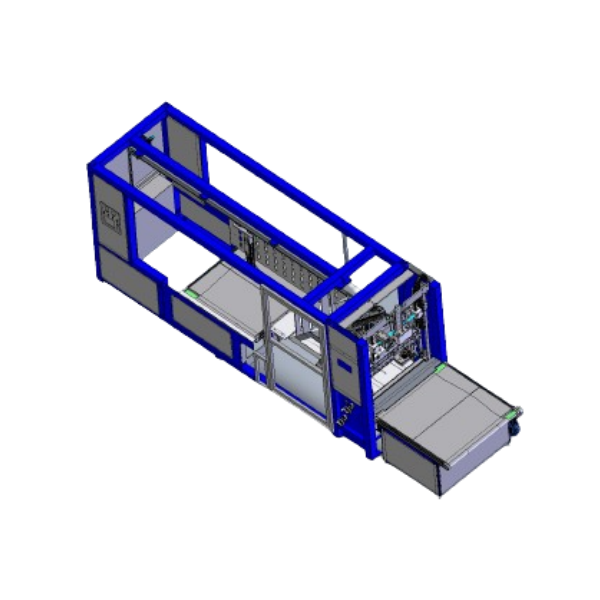
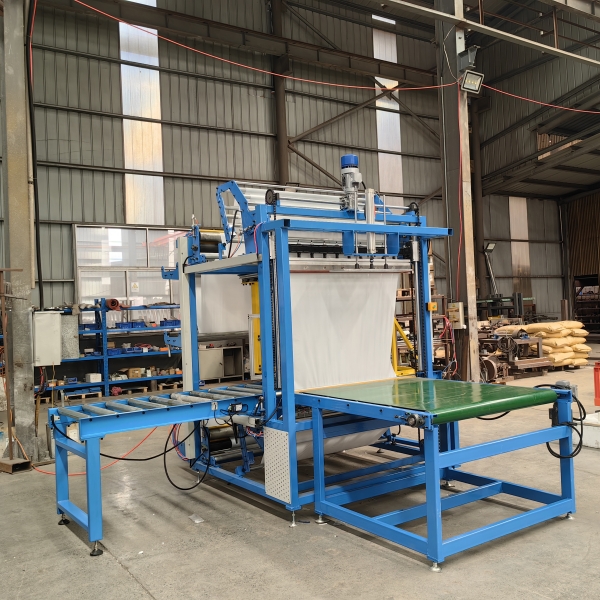
The project combines conveyor sections, stacking equipment and film wrapping equipment. The supplied factory photographs show the connected stations and EPS board packs during a workshop trial. The final equipment arrangement should be defined around the customer’s required pack format and handling process.

EPS board packs beside the conveyor and film wrapping stations during a factory trial.
From Board Packs to a Wrapped Stack
The supplied trial materials describe EPS packs moving along roller conveyors to a stacking station. Packs are brought together into a taller load before transfer toward the large-bundle film wrapping section.
The number of packs per layer, pack orientation, stacking layers and final bundle dimensions form part of the project specification. The required wrapping method and outfeed arrangement should be agreed for the intended load.

Roller conveyor and tall film wrapping station for the downstream EPS packing line.
Planning the Connection to Your Cutting Line
Start with the existing cutting line’s discharge arrangement and the space available for the downstream equipment. Provide a layout drawing showing the flow direction, conveyor height, working area and access for operators and material handling.
Board dimensions alone are not enough to define the line. The review should also cover the size and weight of each pack, the desired bundle arrangement, required output, film requirements and how finished loads will be moved.
Features
- Designed around existing cutting-line operations — A downstream wrapping and stacking project for EPS board manufacturers reviewing their current packing process.
- Connected conveying and handling — Conveyor sections link the stations shown in the supplied project materials.
- Stacking and film wrapping in one project — The proposed system addresses both stack formation and the subsequent wrapping of larger bundles.
- Project-specific pack arrangement — Layer layout, pack orientation and final bundle requirements are considered when defining the configuration.
- Factory trial material for review — The supplied photographs and trial materials help buyers discuss the equipment arrangement and handling sequence with EPSTEC.
Application
For EPS board manufacturers operating an existing cutting line and planning improvements to downstream wrapping, stacking and material handling.
Typical project discussions include organizing the transfer between packing stations, defining the required stack arrangement and preparing larger bundles for subsequent handling. Suitability depends on the existing line interface, pack dimensions, output requirements and available factory space.
Videos
Automatic wrapping stacking packaging production line after EPS cutting line
EPS Cutting Line Automated downstream Packaging and material Handling
Discuss Your Downstream Upgrade
Send EPSTEC photographs or a video of your existing cutting line, a factory layout and examples of the packs you need to handle. Include your target output and the parts of the packing process you want to improve. These details provide the starting point for a project-specific equipment discussion.
Leave a Message
Loading inquiry form… You can also email [email protected].