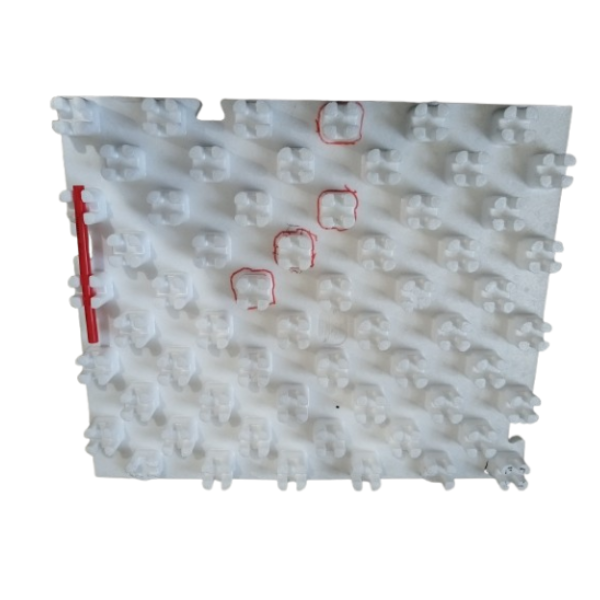
EPP mould for remote controlled hover fighter glider
The deployment of EPP moulds in crafting components for remote-controlled hover fighter gliders represents a significant enhancement in the field of model aviation. Offering an unmatched combination of durability, lightweight, and cost-effectiveness, EPP elevates the performance and excitement of flying these innovative models. Whether you are a hobbyist looking to improve your aircraft or a competitive pilot aiming for precision and resilience, the EPP mould for remote-controlled hover fighter gliders stands out as an essential tool in your aeromodelling toolkit.
Suit for EPS machine
Description
EPP Mould for Remote Controlled Hover Fighter Glider: Revolutionizing Model Aviation
In the world of aeromodelling, precision and performance are paramount. Among the materials contributing to advancements in this area, Expanded Polypropylene (EPP) stands out, particularly when used in manufacturing models like the remote-controlled hover fighter glider. This blog post dives deep into the world of EPP moulds tailored for this specific application, shedding light on their functions, benefits, and much more.
What is an EPP Mould for Remote Controlled Hover Fighter Glider?
An EPP mould for a remote-controlled hover fighter glider is a specialized tool used to shape and create the structural components of hover fighter gliders. These gliders are small, agile, remotely piloted aircraft designed for both recreational and competitive flying. EPP, known for its resilience and lightweight properties, makes it an ideal material for the high demands of remote-controlled aircraft.
Key Functions
| Function | Description |
|---|---|
| Precision Shaping | Enables exact contours and shapes necessary for aerodynamic efficiency. |
| Durability Assurance | Produces parts that withstand crashes and repetitive stress. |
| Heat Resistance | Tolerates the exothermic reactions during the moulding process without deforming. |
| Compatibility with Finishing Processes | Allows for easy painting and finishing, which are crucial for both aesthetics and visibility in flight. |
E
Benefits
- Resilience to Impact: Unlike other materials, EPP doesn’t shatter but rather deforms and then returns to its original shape, ensuring longevity and reducing the need for frequent replacements.
- Lightweight: Its lightness contributes significantly to the flight performance of the glider, allowing for greater maneuverability and prolonged air time.
- Thermal Insulation: EPP’s insulating properties mean it is less affected by temperature variations, maintaining performance across a range of climates.
- Cost-Effective: Given its durability and ease of processing, EPP is a cost-effective choice for hobbyists and professional users alike.
Limitations
- Precision in Higher Densities: As the density of EPP increases to provide more structural strength, it can become more challenging to ensure precise moulding without the right equipment.
- Surface Finish: While EPP is great for the internal structure, its porous nature can require additional finishing work for a smooth exterior.
Technical Specifications
| Specification | Details |
|---|---|
| Density Range | 25 – 200 g/L |
| Moulding Temperature | 130°C – 170°C |
| Thermal Conductivity | 0.035 – 0.040 W/m·K |
| Compressive Strength | 300 – 600 kPa |
| Lifecycle | Up to 500 cycles depending on usage and care |
-
Maintenance or Installation Tips
- Regular Cleaning: Ensure the mould is free from residues and particles by using non-abrasive cleaning agents.
- Check for Wear: Regularly inspect your mould for signs of wear or deformation, which can affect the quality of the final product.
- Proper Storage: Store the mould in a dry, temperature-controlled environment to prevent warping or other damage.
Typical Applications
- Competitive Model Aviation: Used extensively in the construction of models for competitive flying events.
- Hobby Flying: Ideal for hobbyists looking for durable, high-performance models.
- Educational Purposes: Schools and universities use these models to teach aerodynamics and engineering principles.
Output and Its Reuse
EPP’s durability means that the components molded can be reused in multiple models, provided they remain structurally sound. Additionally, EPP is recyclable, which further extends its life cycle by allowing degraded pieces to be processed into new raw materials.
equire additional finishing work for a smooth exterior.
Photo


Video
Leave a Message