EPS tongue and groove EPS insulation panel
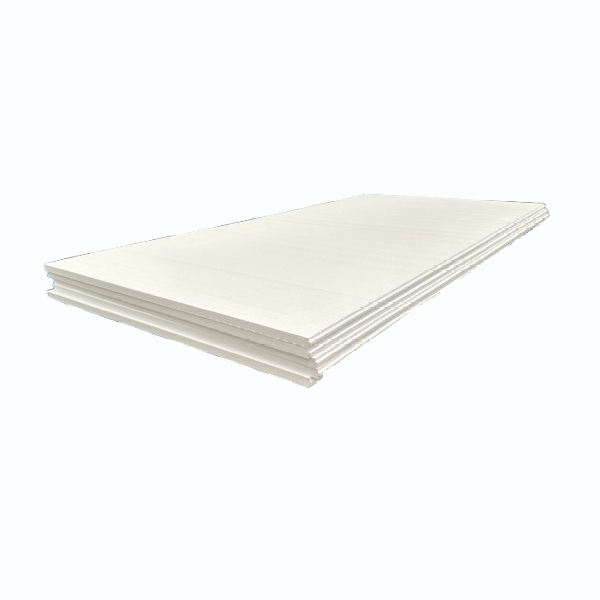
The Tongue and Groove EPS Insulation Panel is a rigid expanded polystyrene insulation board designed with interlocking edge profiles to improve panel alignment, joint continuity, and installation efficiency.
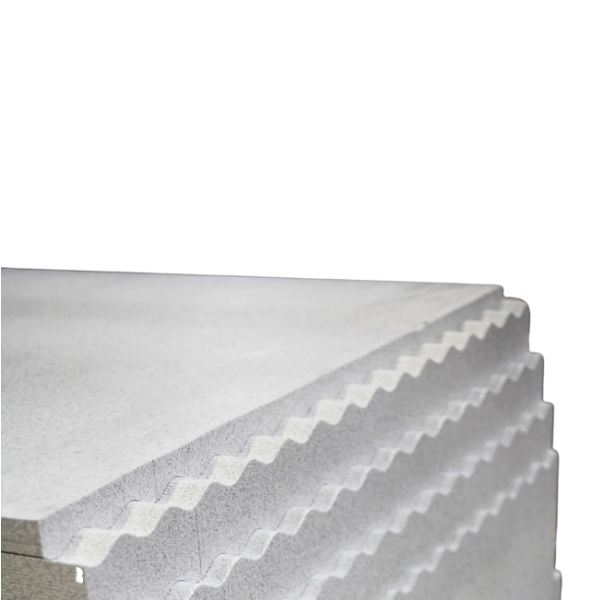
Unlike a standard square-edge EPS board, a tongue and groove panel has complementary male and female edges that fit together during installation. This interlocking structure helps reduce visible gaps between adjacent panels and creates a more continuous insulation layer.
Tongue and groove EPS insulation panels are widely used in wall insulation, roof insulation, floor insulation, prefabricated building systems, cold-room construction, and other thermal insulation applications.
Description
The panel is manufactured from expanded polystyrene foam and processed into a defined board size and edge profile.
Its tongue and groove edges allow neighboring boards to connect more accurately, which can improve installation consistency and reduce misalignment across large insulated surfaces.
The final board density, thickness, dimensions, edge profile, and surface treatment depend on the required application and project specification.
What Is a Tongue and Groove EPS Insulation Panel?
A tongue and groove EPS insulation panel is an EPS foam board with specially machined interlocking edges.
One side of the board includes a projecting tongue, while the mating edge includes a recessed groove. When two panels are installed together, the tongue enters the groove and helps position the boards relative to each other.
This design is especially useful where a continuous insulation layer is required over a large wall, floor, or roof area.
Compared with straight-edge panels, tongue and groove boards can provide more controlled joints and easier panel alignment.
How Does It Work?
During installation, adjacent panels are positioned so that the tongue of one board fits into the groove of the next.
This interlocking connection helps:
- Align neighboring boards
- Reduce joint displacement
- Minimize open gaps
- Create a more continuous insulation surface
- Improve installation repeatability
The thermal insulation performance still depends mainly on the EPS material, panel thickness, density, and overall building system design.
The tongue and groove profile primarily improves the mechanical fit and continuity of the board joints.
Key Functions
- Provides thermal insulation.
- Forms a continuous insulation layer.
- Helps reduce gaps between adjacent boards.
- Improves panel alignment during installation.
- Supports faster and more organized panel assembly.
- Helps maintain consistent joint positioning.
- Provides lightweight insulation for building applications.
Key Features
- Interlocking tongue and groove edge design.
- Manufactured from lightweight EPS foam.
- Easy to cut, handle, and install.
- Suitable for large-area insulation systems.
- Available in different board dimensions and thicknesses according to project requirements.
- Can be produced with customized tongue and groove profiles.
- Suitable for manual or automated EPS board cutting and profiling.
- Can be combined with other building materials depending on the final construction system.
Technical Specifications
Exact specifications depend on the project and manufacturing requirements.
| Item | Description |
|---|---|
| Product Name | Tongue and Groove EPS Insulation Panel |
| Material | Expanded Polystyrene (EPS) |
| Product Type | Rigid thermal insulation panel |
| Edge Design | Tongue and groove |
| Main Function | Thermal insulation and interlocking panel installation |
| Application | Walls, roofs, floors, and building insulation systems |
| Dimensions | Customized according to project requirements |
| Thickness | Depends on insulation requirement |
| Density | Depends on product specification |
| Edge Profile | Customized according to panel design |
Specific requirements such as thermal conductivity, compressive strength, dimensional tolerance, density, and fire-performance classification should be confirmed according to the project specification and applicable construction requirements.
Why Is the Tongue and Groove Design Important?
The joint between insulation panels is an important part of the complete insulation system.
With straight-edge boards, poor installation can create gaps between neighboring panels. These gaps may reduce the continuity of the insulation layer and make installation less consistent.
The tongue and groove structure helps guide the panels into the correct relative position.
This can provide several practical advantages:
- Better panel-to-panel alignment
- More consistent joints
- Reduced risk of open gaps
- Easier installation over large areas
- Improved finished appearance
- Better continuity of the insulation layer
For manufacturers, a stable tongue and groove profile also helps produce a more standardized finished product.
Applications
Tongue and groove EPS insulation panels are commonly used in:
- Exterior wall insulation
- Interior wall insulation
- Roof insulation systems
- Floor insulation
- Concrete slab insulation
- Prefabricated buildings
- Modular construction
- Cold-room insulation
- Warehouse insulation
- Industrial buildings
- Agricultural buildings
- Residential construction
- Commercial construction
- Insulated wall and roof systems
Benefits
- Lightweight and easy to handle.
- Provides effective thermal insulation.
- Interlocking edges help improve panel alignment.
- Helps reduce installation gaps.
- Supports faster board positioning during construction.
- Suitable for large insulation areas.
- Easy to cut and process.
- Can be manufactured in customized sizes and profiles.
- Helps create a cleaner and more uniform insulation surface.
- Suitable for both factory-prefabricated and on-site insulation applications.
Manufacturing and Edge Profiling
Tongue and groove EPS insulation panels are generally produced from molded EPS blocks or boards.
A typical production process may include:
- EPS block molding
- Block conditioning
- Board cutting
- Thickness calibration if required
- Tongue and groove edge profiling
- Dimensional inspection
- Stacking and packaging
The tongue and groove profile can be produced using a dedicated EPS tongue and groove insulation board cutting machine or suitable edge-profiling equipment.
Accurate cutter adjustment is important because the tongue and groove must match consistently from panel to panel.
Quality Considerations
During production, several factors influence the finished panel quality:
- EPS density consistency
- Board flatness
- Thickness consistency
- Tongue width
- Groove width
- Groove depth
- Edge straightness
- Surface condition
- Dimensional accuracy
Poorly cut edge profiles can make installation difficult or create loose joints between panels.
Regular inspection of the cutting equipment and profiling tools helps maintain consistent product quality.
Installation Recommendations
For proper installation:
- Ensure the supporting surface is clean and suitable for the insulation system.
- Check that panel edges are undamaged before installation.
- Align the tongue and groove carefully.
- Push adjacent boards together evenly.
- Avoid forcing misaligned panels into position.
- Cut panels accurately around corners, penetrations, and openings.
- Follow the requirements of the complete wall, roof, or floor system.
Adhesives, mechanical fasteners, membranes, coatings, or other accessories should be selected according to the specific construction system.
Storage and Handling
EPS insulation panels should be handled carefully to avoid damaging the profiled edges.
Recommended practices include:
- Store panels on a flat surface.
- Keep tongue and groove edges protected from impact.
- Avoid excessive compression during stacking.
- Protect the boards from unnecessary contamination.
- Keep panels away from incompatible chemicals or heat sources.
- Inspect edges before installation.
Damaged tongue or groove sections may affect the fit between neighboring panels.
The Tongue and Groove EPS Insulation Panel combines the thermal insulation properties of expanded polystyrene with an interlocking edge design that helps improve panel alignment and joint continuity.
It is a practical solution for wall, roof, floor, cold-room, and prefabricated building insulation applications. With consistent EPS quality and accurate edge profiling, tongue and groove panels can provide efficient installation, stable panel positioning, and a more continuous insulation layer across the finished construction system.
Photo


Leave a Message