

Description
Today, we are going to test the production line of the EPS pelletizer machine before we export to Saudi Arabia.
There are two large bags of EPS waste. Today, we will use these two bags of EPS waste to feed into the EPS pelletizer machine and show you the testing result.
Next, please follow my steps to introduce each part in order.
- Feeding conveyor belt
- EPS Crusher machine
- Feeding fan
- Mixing silo
- The first extruder
- Second extruder
- Die head
- Hydraulic reversing valve
- Hydraulic station
- Cooling pool
- Dry fan
- Traction belt
- Cutter
- Vibrating screen
- Discharge fan
- 2-ton Metal silo
- Moveable weighing system
- Electric control
- Removable plate
Now let us see the results of the PS particles.
As we begin the testing process of the EPS pelletizer machine, it’s crucial to ensure each component functions as intended. Starting with the feeding conveyor belt, we will slowly introduce the EPS waste into the system. The belt smoothly carries the material to the EPS crusher machine, which efficiently breaks down the waste into smaller pieces.
The feeding fan then blows the crushed EPS particles into the mixing silo, where they are evenly mixed. This ensures a consistent feed into the first extruder, which melts the particles under high pressure and temperature. The second extruder further processes the molten material, readying it for extrusion.
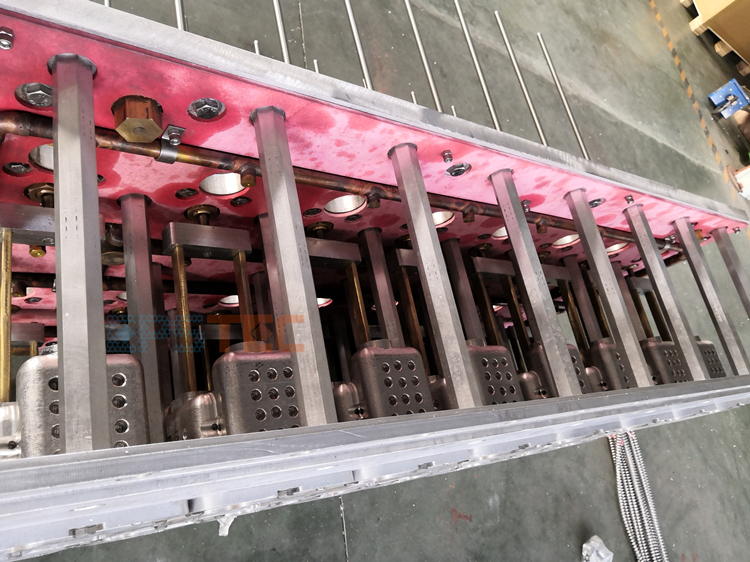
The die head is the next crucial component, shaping the molten EPS into pellets. The hydraulic reversing valve and hydraulic station work together to control the extrusion process, ensuring smooth and efficient pellet formation.
As the pellets exit the die head, they fall into the cooling pool, where they quickly solidify. The dry fan removes any excess moisture, while the traction belt guides the pellets to the cutter. The cutter precisely slices the pellets to the desired length.
A vibrating screen separates any larger particles or impurities, ensuring only high-quality pellets pass through. The discharge fan blows the pellets into the 2-ton metal silo, where they are temporarily stored.
The moveable weighing system ensures accurate measurement of the pellets before packaging. The entire process is controlled by the electric control panel, allowing precise monitoring and adjustment.
Finally, we remove the removable plate to access the pellets and inspect the results. The PS particles are smooth, uniform, and ready for export to Saudi Arabia. This successful testing demonstrates the reliability and efficiency of our EPS pelletizer machine, ensuring a seamless production process for our clients.
Suit for EPS machine
Photo


Video
Leave a Message